
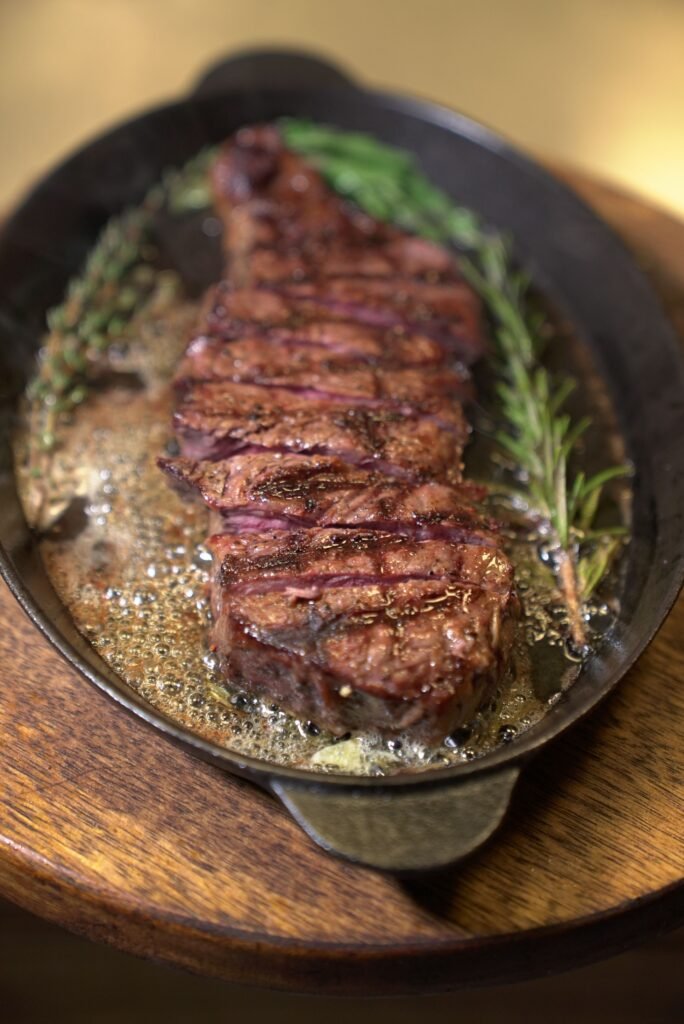
Most men overcook steak. Not because they do not care. Because they are impatient.
A great steak requires exactly three things — quality meat, proper heat, and the discipline to leave it alone. Master those three things and you will never order steak at a restaurant again unless you want the experience of someone else doing the work.
Here is how to do it correctly.
Start With the Right Cut
The cut matters before anything else. You cannot save a bad cut with good technique. You can ruin a great cut with bad technique.
Ribeye — The best steak for most men most of the time. High fat content, rich flavor, forgiving on the heat. If someone tells you the ribeye is not the king of steaks they are wrong.
New York Strip — Leaner than the ribeye, firmer texture, bold beef flavor. The steak for the man who wants substance without the richness.
Filet Mignon — The most tender cut on the animal. Mild flavor, buttery texture, virtually no fat. Order this when someone else is paying.
Tomahawk — A ribeye with the full rib bone attached. Dramatic, delicious, absolutely worth it for the right occasion. The steak that announces itself before it arrives.
The Grade
USDA Prime if you can get it. Choice if Prime is not available. Select belongs in a different conversation.
Wagyu if you want to understand what beef can be at its absolute ceiling. Snake River Farms American Wagyu is the standard. Order it once. You will understand immediately.
The Method — Cast Iron, High Heat, Butter
This is how it is done. Not on a grill. Not in a non-stick pan. Cast iron, screaming hot, with butter, garlic, and thyme at the end.
What you need:
- One ribeye, at least 1.25 inches thick, room temperature
- Kosher salt and black pepper
- Neutral oil — avocado or grapeseed
- Two tablespoons unsalted butter
- Two garlic cloves smashed
- Fresh thyme or rosemary
How to cook it:
Take the steak out of the refrigerator 45 minutes before cooking. Season generously with kosher salt on both sides. Generously means more than you think. Pat dry with paper towels — moisture is the enemy of a good sear.
Heat your cast iron skillet over high heat until it begins to smoke. Add a thin layer of oil. Place the steak in the pan and do not touch it. Do not move it. Do not press it. Leave it alone for 3-4 minutes until a deep brown crust forms.
Flip once. One time. Cook for another 3 minutes.
Reduce heat to medium. Add butter, garlic, and thyme. As the butter melts and foams tilt the pan and baste the steak continuously with the butter for 60-90 seconds.
Remove from heat. Place on a cutting board. Do not cut it yet.
The Rest — The Most Important Step Most Men Skip
Rest the steak for at least 5 minutes. 8 is better. The juices redistribute through the meat during this time. Cut it immediately and those juices run onto your cutting board instead of staying in the steak.
Five minutes of patience is the difference between a good steak and a great one.
The Temperatures
Rare — 120-125°F. Cool red center. Medium Rare — 130-135°F. Warm red center. This is correct. Medium — 140-145°F. Warm pink center. Acceptable. Medium Well — 150-155°F. Slightly pink. Unfortunate. Well Done — 160°F+. No.
Use a proper instant read thermometer. Guessing is for men who do not care how it turns out.
The Sides
A great steak does not need much company. Roasted garlic mashed potatoes. Creamed spinach. A simple arugula salad with lemon and parmesan. A glass of Cabernet Sauvignon or a pour of that Woodford Reserve you opened last week.
The man who cooks a great steak at home has figured out something important — that the best meal you will eat this month probably does not require a reservation.
There Goes That Man. The search is over.