
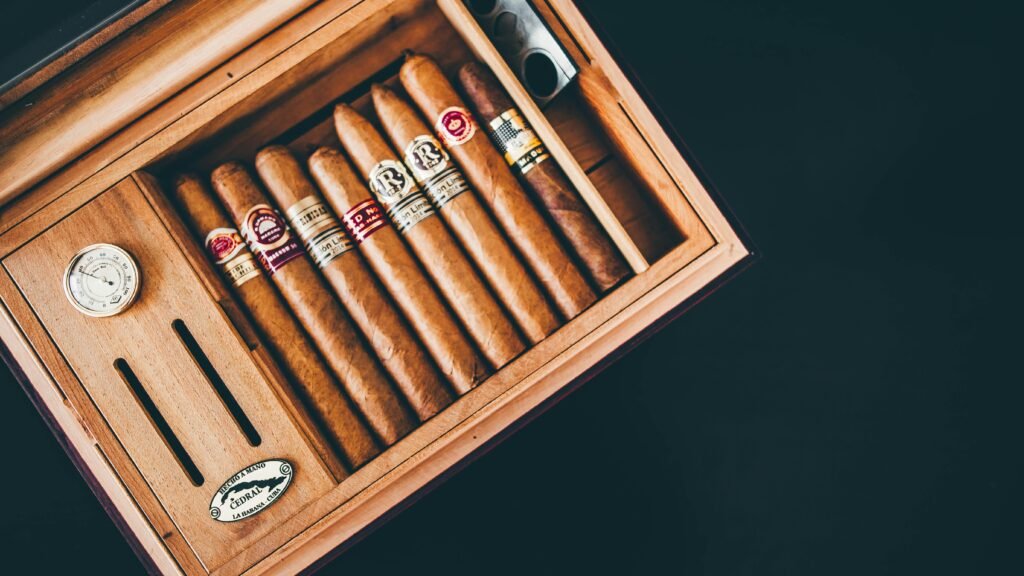
Every man who smokes cigars remembers his first good one.
Not his first cigar — that was probably something cheap and harsh that he smoked at a friend’s bachelor party and did not enjoy. His first good one. The one someone handed him who knew what they were doing. The one that made him understand what all the fuss was about.
This guide is for the man who has not had that cigar yet. And for the man who has and wants to go further.
First — Understand What You Are Actually Smoking
A premium handmade cigar is an agricultural product of extraordinary complexity. It contains three distinct components — the filler, the binder, and the wrapper — each grown in specific conditions, fermented for specific periods, and selected for specific characteristics that determine the final smoking experience.
The wrapper leaf alone — the outermost layer that you see and touch — can account for up to 60% of the cigar’s flavor. It is typically the most expensive and carefully selected leaf in the entire cigar. The man who holds a premium cigar is holding years of agricultural and manufacturing expertise in his hand.
This is not marketing. It is what separates a handmade premium cigar from a machine-made cigar the way a tailored suit separates from a disposable one.
The Anatomy — What You Need to Know
The wrapper — The outermost leaf. Ranges from very light — claro — to very dark — oscuro or maduro. Generally darker wrappers are sweeter and richer. Lighter wrappers tend toward more delicate flavors.
The binder — Holds the filler together. Contributes to combustion and adds its own flavor characteristics.
The filler — The blend of tobaccos that gives the cigar its primary flavor profile. Master blenders spend careers perfecting these combinations.
The cap — The closed end that goes in your mouth. Must be cut before smoking.
The foot — The open end that is lit.
The Sizes — What They Mean
Cigar size affects both the smoking experience and the duration. Larger ring gauge cigars — the diameter measured in 64ths of an inch — smoke cooler because the ratio of wrapper to filler is lower. Longer cigars provide a longer smoke.
Common sizes and their approximate smoking times:
Corona — 5.5 inches by 42 ring gauge. The classic size. 45-60 minutes.
Robusto — 5 inches by 50 ring gauge. The most popular size in premium cigars. 45-60 minutes. The starting point for most men.
Toro — 6 inches by 50-54 ring gauge. Fuller experience, longer smoke. 60-90 minutes.
Churchill — 7 inches by 47 ring gauge. Named for the man himself. 90 minutes to two hours. For when you have the time and the occasion.
Torpedo or Belicoso — Tapered head, usually 6-7 inches. The taper concentrates flavors in a way that many smokers prefer. More challenging to cut correctly.
The Strength — Know What You Are Getting Into
Cigars range from mild to full body. Starting too strong is the most common mistake of the new cigar smoker. Nicotine sickness — dizziness, nausea, sweating — is preventable by starting mild and working up.
Mild — Accessible, subtle, forgiving for the new smoker. Macanudo Cafe, Montecristo White, Arturo Fuente Hemingway.
Medium — The sweet spot for most experienced smokers. Balanced strength and complexity. Romeo y Julieta 1875, Oliva Serie G, Perdomo Reserva 10th Anniversary.
Full — For the experienced smoker who wants intensity. Padron 1964 Anniversary, My Father Le Bijou 1922, Liga Privada No. 9.
Start mild. Work up as your palate develops. There is no virtue in starting with a full body cigar and suffering through it.
Where to Buy — Sources Worth Trusting
Local tobacconist — The best option for the new cigar smoker. A good tobacconist will ask about your experience, your preferences, and recommend something appropriate. The relationship with a knowledgeable tobacconist is one of the most valuable resources available to the cigar enthusiast.
Casa de Montecristo — Premium cigar lounges with a curated selection and staff who know what they are selling. The environment enhances the experience.
Cigars International — Reliable online retailer with a broad selection and competitive pricing. Good for stocking your humidor once you know what you like.
Famous Smoke Shop — The largest online cigar retailer. Enormous selection, frequent sales, reliable shipping.
Smoke Inn — Boutique retailer specializing in premium and allocated cigars — Liga Privada, Padron, My Father. The source for the harder to find bottles in cigar form.
The Equipment — What You Actually Need
A cutter — The guillotine cutter is the standard. Two blades, clean cut, appropriate for most cigars. A punch cutter works for smaller ring gauges. A V-cut produces a different draw that some smokers prefer. Never use your teeth. Never use scissors. A proper cutter costs $20-50 and lasts indefinitely.
What to buy: Xikar Xi2 Cutter — stainless steel blades, lifetime warranty, the benchmark of cigar cutters.
A lighter — Butane only. A torch lighter produces a clean, hot, consistent flame that lights a cigar correctly. A soft flame lighter works for the patient smoker. Never use a petroleum lighter — the fuel affects the flavor of the first several draws in a way that a butane lighter does not.
What to buy: Xikar Tactical Single Torch for simplicity. Colibri Quasar Triple Flame for reliability in outdoor conditions.
A humidor — Essential for anyone smoking more than occasionally. A humidor maintains the humidity at which cigars are stored — typically 65-70% relative humidity — preventing them from drying out and becoming harsh and unpleasant or becoming too moist and difficult to light and smoke.
Entry level: A Boveda Starter Kit — a resealable bag with a Boveda humidity pack — keeps a small number of cigars in ideal condition for months. $15. The starting point before investing in a proper humidor.
Proper humidor: A Spanish cedar lined wooden box with a hygrometer and humidification system. Quality Importers makes reliable entry-level humidors at $50-150. A well-maintained humidor stores cigars indefinitely and improves them over time.
A cigar rest or ashtray — A proper ashtray with cigar rests keeps ash contained and gives the cigar somewhere to rest between draws. A dedicated cigar ashtray signals that you take this seriously. Your household ceramics signal that you do not.
The Cut — Get This Right
Cut the cap — the rounded closed end — approximately 1/16 to 1/8 inch from the top. The goal is to open the draw without cutting so far that the wrapper begins to unravel.
Cut decisively. A slow, hesitant cut tears rather than cuts cleanly. One confident motion. The cutter should be sharp enough that you feel almost no resistance.
Examine the cut before lighting. It should be clean and even with the wrapper intact on both sides.
The Light — The Most Important Step Most Men Rush
Toast the foot — the open end — by holding the flame approximately half an inch below it and rotating the cigar slowly. You are warming the tobacco before the flame touches it. This produces an even light and a better smoking experience than simply touching flame to foot.
Once the foot glows evenly place the cigar in your mouth and draw slowly while holding the flame just below the foot. Continue rotating. The foot should be glowing evenly across its entire surface.
Blow gently on the lit end. A perfectly lit cigar glows uniformly orange across the entire foot. An uneven light — a hot spot on one side — causes uneven burning that requires correction.
Take the time to light it correctly. Three minutes of proper lighting produces a better smoke than three seconds of impatient lighting.
The Smoke — How to Actually Do It
Cigars are not cigarettes. Do not inhale. The smoke is meant to be drawn into the mouth, appreciated, and exhaled. The flavors are experienced in the mouth and retrohaled — exhaled through the nose — not in the lungs.
Draw slowly. One draw every 30-60 seconds. A cigar smoked too quickly overheats, produces harsh flavors, and burns unevenly. The pace that feels slower than natural is approximately correct.
Let the ash build. A cigar that holds a long, firm, pale grey ash is burning correctly at the right temperature. Tapping ash prematurely like a cigarette disturbs the burning temperature and disrupts the experience. Let it fall naturally when it is ready.
If the cigar goes out — which happens — relight it within a few minutes without difficulty. After that the flavors change and relighting produces a harsher experience. Smoke at a pace that keeps it lit.
The Pairing — Elevate the Experience
A cigar alone is excellent. A cigar paired correctly is something else entirely.
Bourbon — The classic American pairing. The sweetness and vanilla notes of good bourbon complement medium to full body cigars. Buffalo Trace with a Padron. Blanton’s with an Opus X. Pappy Van Winkle with whatever you can find.
Scotch — Peated Scotch and full body cigars is a sophisticated pairing for the experienced palate. The smoke of both products creates harmony rather than competition. Lagavulin 16 with a Liga Privada No. 9.
Rum — Diplomatico Reserva Exclusiva with a medium body Dominican cigar. The sweetness of aged rum complements the creamier tobacco profiles beautifully.
Coffee — A double espresso with a mild to medium cigar in the morning. The classic Cuban tradition. Correct in every context.
Cognac — Hennessy XO or Remy Martin XO with a full body cigar. The combination that the great men of the previous century chose for a reason.
The Etiquette — What the Serious Smoker Knows
Smoke where smoking is welcome. Not everywhere is and the cigar smoker who imposes his hobby on those who did not choose it damages the culture for everyone.
Do not smoke a cigar you cannot commit to finishing. A half-smoked premium cigar left in an ashtray is a waste of something that took years to produce.
Do not offer an unsolicited opinion on another man’s cigar choice. What he is smoking is his business.
Do not rush. The man who smokes a Churchill in 45 minutes has missed the point entirely. If you do not have 90 minutes give it to a man who does.
Share good cigars. Few pleasures are enhanced more by company than a good cigar on a good evening with men worth spending it with.
The Journey
The cigar world is deep, regional, historical, and endlessly interesting. There are tobaccos from Nicaragua, the Dominican Republic, Honduras, Ecuador, Connecticut, and Cuba each with distinct characteristics shaped by soil, climate, and tradition. There are blenders whose careers span decades and represent lineages of knowledge that trace back generations.
You do not need to know all of this to enjoy a great cigar. But the more you know the more you enjoy. And the more you enjoy the deeper you go.
Start with a Robusto. Find a tobacconist you trust. Ask questions. Smoke slowly. Pay attention.
The cigar will do the rest.
There Goes That Man. The search is over.