
There is something about a road trip that no other form of travel replicates.
Not the destination. The journey. The particular freedom of moving through the world at your own pace, on your own schedule, with no gates to catch and no itinerary that cannot be changed on a whim because something interesting appeared on the left side of the road.
The road trip is one of the last genuinely unstructured experiences available to the modern man. Here is how to make it worth having.
First — Choose the Right Route
The best road trips are not the most direct. They are the most interesting. The interstate gets you there faster. The two-lane highway gets you there better.
The routes worth driving:
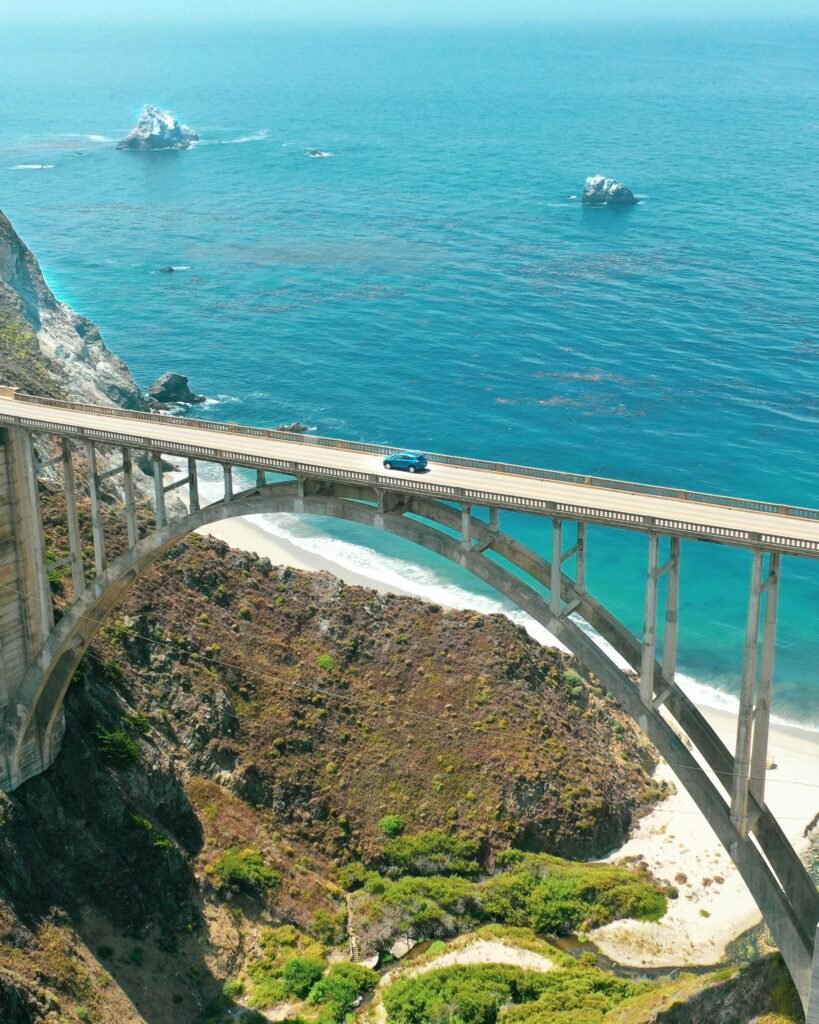
Pacific Coast Highway — California — Highway 1 from San Francisco to Los Angeles or the reverse. The ocean on one side, cliffs on the other, Big Sur in the middle. One of the most beautiful drives in the world. Allow three to four days minimum. Do not rush it.
The Blue Ridge Parkway — Virginia to North Carolina — 469 miles of ridgeline driving through the Appalachian Mountains. No commercial vehicles, no billboards, no traffic lights. Speed limit 45mph — appropriate for the scenery. Fall foliage from mid-October through early November is extraordinary.
Route 66 — Chicago to Los Angeles — 2,400 miles of American mythology. Not the fastest or the most scenic but the most historically significant road in America. Ghost towns, vintage diners, desert landscapes, and the particular feeling of driving through American history.
The Extraterrestrial Highway — Nevada — Highway 375 through the Nevada desert. Minimal traffic, alien-themed roadside attractions, Area 51 on one side, the Great Basin on the other. Strange, vast, and unlike anything else in America.
Going-to-the-Sun Road — Montana — 50 miles through Glacier National Park. Open only in summer. One of the most spectacular mountain drives in North America. Reserve accommodations inside the park months in advance.
The Car — Match It to the Journey
The right car for a road trip depends on the road and the man driving it.
A sports car on a coastal highway is exactly right. A truck on a dirt road through national forests is exactly right. A luxury sedan for a multi-day journey across state lines is exactly right.
What is not right is an uncomfortable car on a long journey. Seat comfort, driving position, and suspension tuning matter over six hours in a way they do not matter on a twenty minute commute.
If your daily driver is not comfortable for long distances consider renting something that is. Turo gives you access to interesting vehicles — a Porsche Cayenne, a Land Rover Defender, a vintage muscle car — that make the journey part of the experience.
The Preparation — Do This Before You Leave
The car: Oil change if due within the trip mileage. Tire pressure and condition. Brake inspection. Fluid levels. A roadside emergency kit — jumper cables, tire inflator, emergency triangle, basic tools. Rhino USA makes the correct kit. The man who is prepared does not need to be rescued.
Navigation: Download offline maps for your route on Google Maps or Maps.me before departure. Cell service is not guaranteed and discovering this in the Nevada desert is not the time to learn it.
Know the major towns along your route and where fuel is available. The scenic roads that make for great driving often have long stretches between gas stations.
Accommodations: Book in advance for peak season and popular routes. The Pacific Coast Highway in summer and the Blue Ridge Parkway in fall fill up weeks ahead. Flexibility is one of the great pleasures of road trips — do not eliminate it entirely by leaving accommodations to chance.
The Pack — Less Than You Think
The road trip is where the capsule wardrobe concept proves itself completely. You are moving. You do not need options. You need a week of clothing that works together, travels well, and requires minimal maintenance.
Dark denim — one pair. Wears multiple days without looking like it. Chinos — one pair. A versatile middle ground. T-shirts — three. Button-down — one. Lightweight merino sweater — one. Works as a layer or on its own. Jacket — one that handles weather changes.
A quality duffel bag — not a rolling suitcase. The Filson Medium Duffel or the Tumi Alpha Bravo pack flat, fit in any trunk, and look correct regardless of the destination.
The In-Car Experience — Make the Hours Worth Having
The hours between destinations are not dead time. They are the heart of the experience. Invest in making them excellent.
Music — Build the playlist before you leave. Not an algorithm. Your playlist. The songs that mean something to you in specific places and specific moods. A road trip playlist built with intention becomes the soundtrack of the memory.
Podcasts and audiobooks — Long drives are the opportunity to consume the long-form content that daily life does not accommodate. Audible with a downloaded audiobook. A podcast series you have been meaning to start. The 14-hour biography of someone who deserves 14 hours of your attention.
Silence — The underrated option. The man who drives through the Nevada desert in silence for an hour experiences something that the man with noise in his ears cannot. Some landscapes deserve to be heard as much as seen.
Snacks done correctly: Not gas station junk. Proper provisions assembled before departure. A quality cooler — YETI Roadie 24 — keeps drinks cold for days and holds real food. Charcuterie, good cheese, fruit, dark chocolate, nuts. The man who eats well on a road trip feels better and drives better.
The Stops — Where the Stories Come From
The destination is the excuse. The stops are the point.
The rule: When something interesting appears — a sign for a roadside attraction, a diner that looks like it has been there since 1952, a viewpoint that pulls over half the cars on the road — stop. The schedule can absorb it. The memory cannot be manufactured later.
What to look for:
State and national parks — America’s greatest public investment. Every major road trip passes near at least one worth a detour. The entrance fee is modest. The experience is extraordinary.
Small towns on Main Street — Not the tourist trap main streets. The ones with a hardware store, a diner, and a barbershop that has been cutting hair in the same chair for forty years. These places are disappearing. Stop in them while they exist.
Local restaurants over chains — Every region has food that cannot be found anywhere else. Texas brisket in the Hill Country. Lobster rolls on the Maine coast. Green chile on everything in New Mexico. Low country boil in coastal South Carolina. The man who eats at chains on a road trip is choosing convenience over experience every time he does it.
Overlooks and viewpoints — Pull over for them. Every one. The view from the car is not the same as the view from outside it. Get out. Stand in it. Take three minutes.
The Night — Where to Sleep
Hotels — The practical choice. Consistent quality, reliable wifi, easy booking. Marriott Bonvoy or Hilton Honors points make the stays more affordable and upgrades more frequent.
Boutique hotels and inns — The better choice when available. A historic inn in a small town, a boutique hotel in a mountain town, a bed and breakfast on a coastal bluff — these places have character that chains cannot manufacture. Worth the extra research to find them.
Camping — The most immersive option. Sleeping under stars in a national park after a day of driving through one produces a specific kind of satisfaction that a hotel room cannot replicate. A quality sleeping bag, a good pad, and a tent that goes up in under ten minutes — the REI Co-op Half Dome — are all you need.
Airbnb — For the longer stays. A house or cabin in a specific location allows you to slow down, cook, and inhabit a place rather than simply pass through it.
The Solo Road Trip — A Specific Recommendation
Every man should take at least one solo road trip. Not because the company of others is not valuable. Because the experience of being entirely alone in a car moving through the world is clarifying in a way that cannot be replicated with another person present.
You stop when you want. You eat when you hungry. You play what you want to hear. You think without interruption. You encounter your own mind in conditions that normal life does not provide.
The man who returns from a solo road trip has had a conversation with himself that most men never have the silence to complete.
Take one. Sooner than you plan to.
The Return
Every great road trip ends with the same feeling — the reluctance to return combined with the particular satisfaction of having been somewhere and done something and seen things that exist now only in memory and photographs.
The return is not a failure of the adventure. It is what makes the adventure finite and therefore valuable. The road will still be there. Take it again when you are ready.
There Goes That Man. The search is over.