
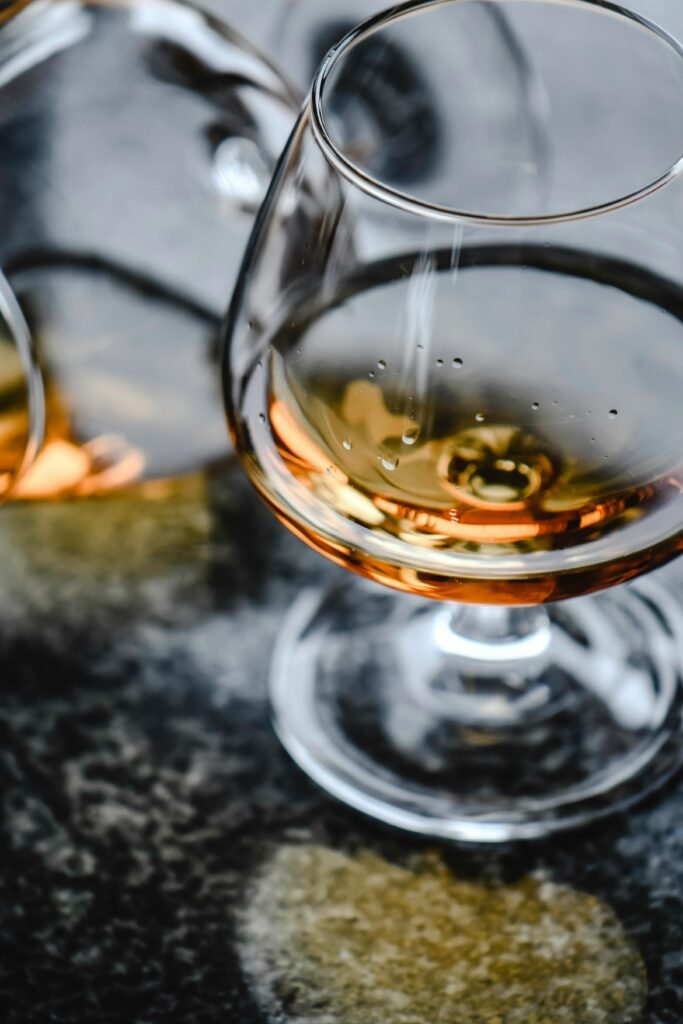
Most men who drink whiskey drink bourbon or Scotch. They have found what they like and they stay there. This is not wrong. But it is incomplete.
The world of whiskey is considerably larger than those two categories. There are Irish whiskeys that will change what you think smooth means. Japanese whiskeys that will change what you think precision means. Canadian whiskeys that will change what you think underrated means. American rye whiskeys that will change what you think bold means.
The man who has only drunk bourbon and Scotch has read two chapters of a much longer book. Here is the rest of it.
First — The Basics
Whiskey — spelled with an e in Ireland and America, without in Scotland, Canada, and Japan — is a spirit distilled from fermented grain, aged in oak, and bottled at a minimum of 40% alcohol by volume.
Beyond those shared characteristics everything diverges. The grain. The distillation method. The cask. The climate of aging. The tradition of the place it was made. These variables produce spirits of extraordinary diversity that share a name and little else.
Understanding that diversity is the beginning of understanding whiskey.
Irish Whiskey — The Smoothest Tradition
Irish whiskey is triple distilled — run through the still three times compared to the Scottish standard of twice. The additional distillation removes more congeners — the compounds that produce flavor but also harshness — producing a spirit of exceptional smoothness that is more approachable than most Scotch and more complex than most people expect.
Irish whiskey must be aged a minimum of three years in wooden casks on the island of Ireland. It can be made from malted barley, unmalted barley, or a combination — the unmalted barley producing a distinctive spicy quality called pot still character that is unique to Irish whiskey.
The bottles worth knowing:
Redbreast 12 — The benchmark of Irish pot still whiskey. Rich, complex, with notes of fruit, spice, and a long warming finish. The bottle that converts men who thought they did not like Irish whiskey. Around $60.
Green Spot — Single pot still, aged in a combination of bourbon and sherry casks. Approachable, complex, excellent value. Around $55.
Teeling Single Grain — Aged in Californian red wine casks. Unusual, interesting, a departure from the Irish whiskey mainstream that demonstrates how creative the category has become. Around $40.
Midleton Very Rare — The prestige Irish whiskey. Released annually as a vintage expression. Rich, complex, the ceiling of the Irish whiskey category. Around $180.
Yellow Spot — 12 year old single pot still finished in Malaga casks. Remarkable complexity and fruit character. The step up from Green Spot for the man ready to go further. Around $90.
Japanese Whisky — Precision Distilled
Japanese whisky began as an imitation of Scotch whisky — Masataka Taketsuru traveled to Scotland in 1918 to learn distillation and brought the knowledge home. What developed over the following century was not imitation but evolution — a distinctly Japanese approach to whisky production that emphasizes precision, balance, and the harmony of flavors over the bold individual characteristics that define Scotch.
Japanese whisky is made primarily from malted barley using pot stills but the similarities to Scotch largely end there. Japanese distilleries use a wider variety of cask types — American oak, Spanish oak, and Japanese Mizunara oak, the rarest and most prized of whisky casks. They blend with a precision that reflects broader Japanese manufacturing philosophy — the pursuit of consistency and balance rather than idiosyncrasy.
The result is whisky of extraordinary elegance. The whisky for the man who finds Scotch too aggressive and bourbon too sweet.
The bottles worth knowing:
Suntory Toki — The entry point. Blended, light, approachable. Excellent in a highball — whisky over ice with soda water, a lemon twist, served in a tall glass. The Japanese highball is one of the great simple pleasures of whisky drinking. Around $35.
Nikka From the Barrel — The value overperformer. Blended, high proof, remarkable complexity at its price point. Around $50 when you can find it.
Suntory Hibiki Japanese Harmony — The most recognized Japanese whisky. Blended, elegant, the whisky that introduced many Americans to the Japanese category. Around $80.
Yamazaki 12 — Single malt from Japan’s oldest distillery. Remarkable — fruit, oak, a quality unlike any Scotch or bourbon. Around $150 when available. Frequently unavailable. Worth the search.
Hakushu 12 — The forest whisky. Green, fresh, slightly peated. The Japanese single malt that is most unlike Scotch in the most interesting way. Around $150.
A note on availability — Japanese whisky became internationally popular faster than Japanese distilleries could age inventory to meet demand. Many expressions are allocated or unavailable at retail. If you see a bottle of aged Japanese single malt at reasonable retail price buy it.
American Rye — The Original American Whiskey
Before bourbon dominated American whiskey rye was king. Rye whiskey — made from a mash of at least 51% rye grain — was the whiskey of the American founding. George Washington distilled rye at Mount Vernon. It was the spirit of the original cocktail era.
Rye is bolder, spicier, and drier than bourbon. The rye grain produces a distinctively assertive character that makes rye whiskey exceptional in cocktails — the Manhattan and the Old Fashioned were originally made with rye, not bourbon — and increasingly appreciated neat by the man whose palate has developed beyond the sweetness of bourbon.
The bottles worth knowing:
Rittenhouse Rye — The bartender’s standard. 100 proof, excellent quality, extremely affordable at $25. The rye that belongs behind every serious home bar.
Sazerac Rye — Named for the cocktail it was made to accompany. Elegant, spicy, the classic American rye. Around $30.
WhistlePig 10 — The premium rye. 100% rye mash bill, aged 10 years, Vermont bottled. The rye that proved the category could produce something exceptional. Around $75.
Michter’s US*1 Rye — Small batch, excellent quality, the rye for the man who wants something between everyday and special occasion. Around $45.
High West Double Rye — A blend of straight rye whiskeys that produces something more complex than either component. Utah’s contribution to the American whiskey renaissance. Around $40.
Canadian Whisky — The Most Underrated Category
Canadian whisky is the most dismissed category in the whiskey world and the most unfairly so. The reputation for lightness and blandness is based on the bottom shelf expressions that dominate the category commercially. The serious Canadian whiskies — and they exist — are extraordinary.
Canadian whisky must be aged a minimum of three years in Canada. It is typically blended — base grain whisky blended with flavoring whisky — and tends toward lighter, smoother profiles than American or Scotch expressions.
The bottles worth knowing:
Crown Royal Northern Harvest Rye — Won Jim Murray’s Whisky Bible World Whisky of the Year in 2016. The expression that forced the world to reconsider Canadian whisky. Around $35.
Forty Creek Confederation Oak — Finished in virgin Canadian oak. Rich, complex, the Canadian whisky that drinks like something considerably more expensive. Around $50.
Canadian Club Chronicles — Age-stated expressions from one of Canada’s historic distilleries. The 41 year old expression is one of the most remarkable value propositions in aged whisky. Around $60.
JP Wiser’s 35 Year — The prestige Canadian whisky. Extraordinarily complex, smooth, a demonstration of what Canadian whisky becomes with time. Around $200.
World Whisky — The Frontier
Beyond the established categories whisky is being produced in places that would have seemed improbable a generation ago. India, Taiwan, Australia, Sweden, France, England — each producing whisky of genuine quality that reflects local grain, local water, local climate, and local tradition.
Kavalan — Taiwan — Produced in subtropical heat that accelerates aging. Rich, tropical, unlike any Scotch or bourbon. The Solist series represents some of the most acclaimed whisky produced outside Scotland. Around $80-200 depending on expression.
Amrut — India — Indian single malt aged at altitude in Bangalore. The high altitude and dramatic temperature swings produce rapid maturation and a spirit of remarkable complexity. Around $55.
Starward — Australia — Aged in Australian red wine casks. Fruit-forward, approachable, genuinely excellent at its price point. Around $45.
Mackmyra — Sweden — Swedish single malt using local grain, local water, and Swedish oak. The most interesting Nordic contribution to the whisky world. Around $70.
The Glass — How to Drink It
Every whisky category has its preferred serving style but a few principles apply universally.
A proper whisky glass — tulip shaped, narrow at the top to concentrate aromas — improves any whisky regardless of category. The Glencairn is the standard. The Norlan is the modern alternative. Both improve the experience over a rocks glass.
Explore each whisky neat before adding anything. Each category has a different relationship with water and ice.
Irish whiskey opens beautifully with a few drops of water. Japanese whisky in a highball — ice and sparkling water — is one of the great simple pleasures. American rye in a Manhattan — two parts rye, one part sweet vermouth, two dashes Angostura bitters, stirred, strained, served with a cherry — is the cocktail the spirit was made for.
The Journey
The man who began with bourbon and discovered Scotch has made one step. The man who then discovers Irish whiskey, Japanese whisky, American rye, Canadian whisky, and the emerging world expressions has made a journey.
It is a journey with no end. The category is too large, too diverse, and too continuously evolving to exhaust. New distilleries open. New expressions are released. New categories emerge.
This is not a problem. It is the point.
Pour something new. Pay attention. Go further.
There Goes That Man. The search is over.