
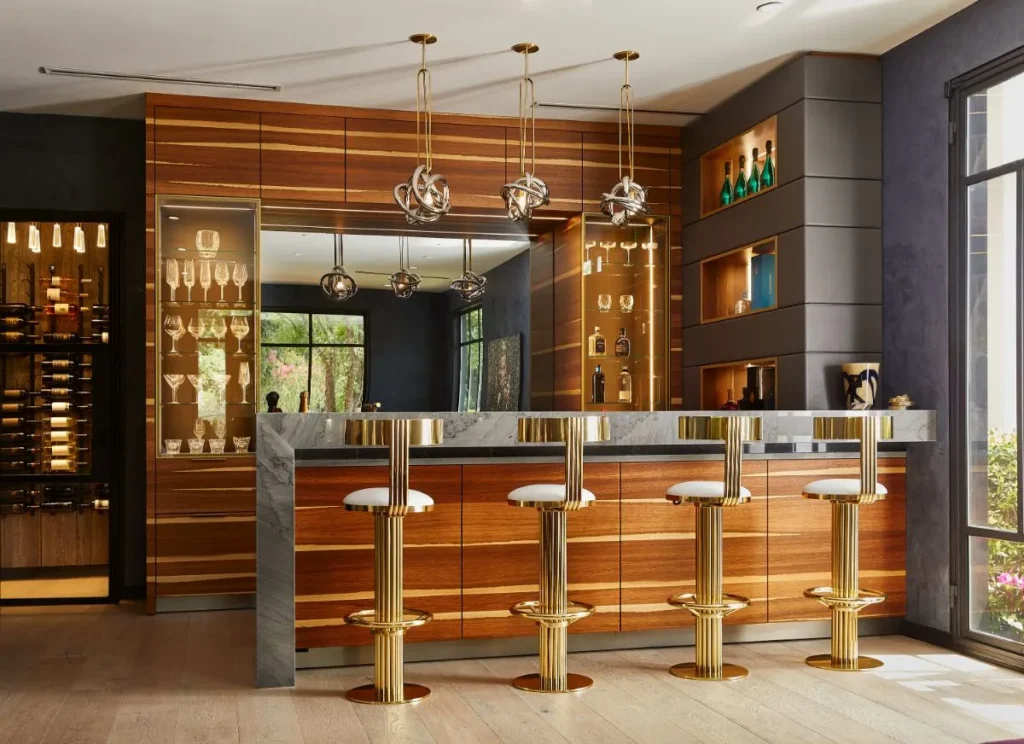
A man’s bar says something about him before he pours a single drink.
Not because of how much it cost. Because of how much thought went into it. The right bottles, the right tools, the right glass for the right drink — these are not accidents. They are decisions. And the man who makes them correctly has built something that serves every occasion from a quiet Tuesday night to a room full of people who did not expect to be impressed.
Here is how to build it correctly.
The Foundation — The Bottles Every Bar Needs
A proper home bar does not need fifty bottles. It needs the right twelve. Everything else is a guest appearance.
Bourbon — Buffalo Trace as your workhorse. Blanton’s or Four Roses Single Barrel when you want to impress. Both covered in the bourbon guide. You know what to buy.
Scotch — Glenfiddich 15 for the accessible single malt. Macallan 12 Double Cask when the occasion calls for it. One blended option — Johnnie Walker Black — for guests who are not yet ready for single malt.
Tequila — Patron Silver for mixing. Don Julio 1942 for sipping. Clase Azul Reposado if you want the conversation piece on the shelf.
Gin — Hendrick’s for the man who drinks gin. Tanqueray for the man who needs a gin and tonic at a moment’s notice. Both are correct.
Vodka — Grey Goose or Belvedere. One bottle. Kept in the freezer. Used sparingly and only when requested.
Rum — Diplomatico Reserva Exclusiva. The rum that converts men who think they do not drink rum.
Champagne or Prosecco — Always one bottle chilled. Always. The moment that requires a toast arrives without warning.
Vermouth — Dry and sweet. Dolin for both. Keep them in the refrigerator after opening. Replace them every two months. Old vermouth ruins good cocktails.
Amaro — Aperol for spritzes. Campari for Negronis. Montenegro for the man who wants something more interesting than both.
Bitters — Angostura always. Peychaud’s for New Orleans classics. Orange bitters for everything else. These cost almost nothing and make everything better.
The Tools — Buy Them Once
A bar without proper tools is a kitchen without knives. Functional but frustrating.
Cocktail shaker — A weighted Boston shaker. Two pieces, no leaky springs, professional grade. Cocktail Kingdom or Koriko. Around $30. Buy once.
Bar spoon — For stirred cocktails. Long handled, twisted stem, weighted tip. Stirring is not optional for certain drinks. A Martini shaken is a different drink than a Martini stirred.
Jigger — Precision matters. A Japanese style jigger with clear measurement lines. Cocktail Kingdom again. The man who free pours is the man whose cocktails are inconsistent.
Strainer — Hawthorne strainer for shaken drinks. Fine mesh strainer for double straining. Both are necessary.
Muddler — Wood or stainless steel. For Old Fashioneds, Mojitos, and anything that requires fresh citrus or herbs to be broken down.
Citrus juicer — Fresh juice only. The difference between fresh squeezed lemon juice and bottled is the difference between a real cocktail and a compromise. A simple handheld citrus press costs $15 and changes everything.
Ice — Large format ice for spirits on the rocks and stirred cocktails. Standard cubes for shaking. A Tovolo King Cube tray makes perfect 2-inch cubes. Ice is not an afterthought. It is an ingredient.
The Glasses — The Right Glass for the Right Drink
Rocks glass — For Old Fashioneds, Negronis, whiskey neat or on the rocks. Heavy base, wide mouth. Riedel or Libbey.
Coupe glass — For Martinis, Manhattans, Daiquiris, anything served up. More elegant than a martini glass and far more practical — nothing spills.
Highball glass — For gin and tonics, whiskey sodas, anything long. Tall, straight sided, simple.
Wine glasses — Red and white. Do not overthink this. Riedel makes the correct ones at every price point.
Champagne flute — For champagne and Prosecco. One set. Keep them clean and stored properly.
Nick and Nora glass — Optional but correct. Smaller than a coupe, more refined, perfect for spirit-forward cocktails served in smaller portions.
The Setup
Your bar should be organized the way a professional bar is organized — spirits grouped by category, tools within reach, glasses accessible without searching.
A bar cart works for smaller spaces. A dedicated cabinet or credenza works for larger ones. A built-in bar is the correct long term solution for the man building his castle properly.
Light it properly. Under-shelf lighting or a small lamp nearby makes the bottles glow and the whole setup look intentional rather than assembled.
Keep a linen bar towel. Keep the surface clean. Keep the bottles wiped down. The bar that looks good when no one is there looks better when someone is.
The Three Cocktails Every Man Should Know How to Make
The Old Fashioned — Covered in the bourbon guide. Make it correctly every time.
The Negroni — Equal parts gin, Campari, and sweet vermouth. Stirred with ice. Strained into a rocks glass over a large ice cube. Orange peel expressed and dropped in. Three ingredients. Infinite occasions. Learn this one first if you learn nothing else.
The Martini — Two and a half ounces of gin or vodka. Half an ounce of dry vermouth. Stirred with ice for 30 seconds. Strained into a chilled coupe. Lemon twist or olive depending on preference. The most elegant cocktail ever made. The one that separates the men who know from the men who are still learning.
The Bar as Statement
A well built home bar is not about having something to show people. It is about having something to offer them.
The man who can make a proper Negroni at ten o’clock on a Wednesday night for the person sitting across from him has given them something — a moment, an experience, evidence that he pays attention to things that matter.
That is what a proper bar is for.
There Goes That Man. The search is over.