
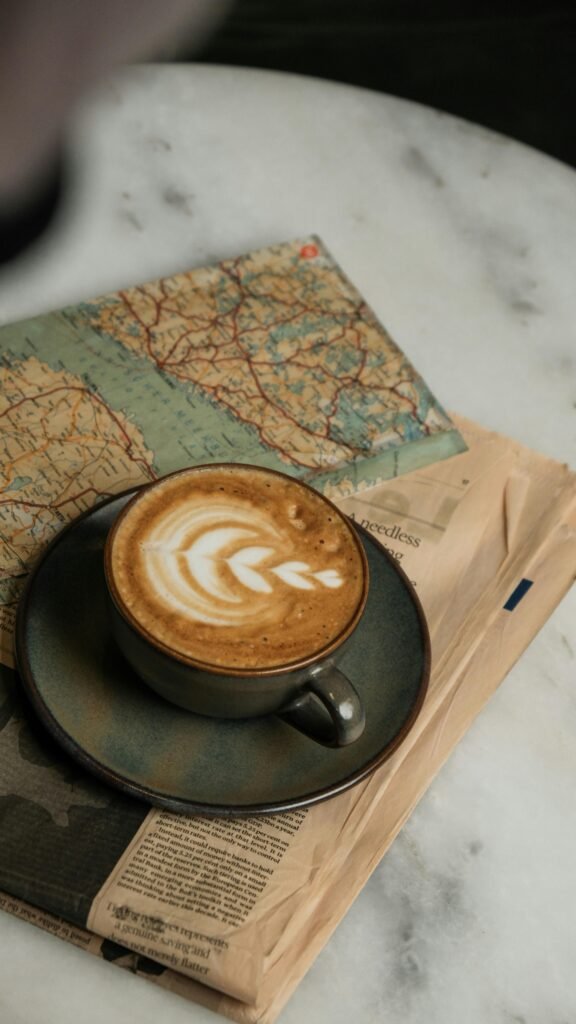
Most men drink coffee. Few men make it well.
The difference is not equipment. It is not expense. It is attention. The man who pays attention to what goes into his cup gets something worth drinking every morning. The man who does not gets caffeine delivery and nothing more.
Coffee done correctly is one of the small daily pleasures that costs almost nothing and returns something significant — a moment of genuine quality before the day begins. Here is how to get there.
Start With the Right Beans
Everything begins here. Bad beans cannot be saved by good equipment or good technique. Good beans can survive imperfect technique and still produce something worth drinking.
What to look for:
Freshness above everything. Coffee is a perishable product. The enemy is time — specifically the time between roasting and brewing. Coffee is at its peak between four and fourteen days after roasting. After thirty days it has lost most of what made it interesting.
Buy from a roaster who prints the roast date on the bag. Not the best by date. The roast date. If a bag does not have a roast date the roaster does not want you to know how old it is. Do not buy it.
Single origin vs blend:
Single origin coffee comes from one farm, one region, one country. It has a specific flavor profile shaped by soil, altitude, climate, and processing method. Ethiopian coffees tend toward berry and floral notes. Colombian toward chocolate and caramel. Kenyan toward bright acidity and black currant.
Blends combine beans from multiple origins to create a consistent, balanced flavor profile. Neither is superior. They serve different purposes. Single origin rewards attention and curiosity. A well-crafted blend rewards consistency.
Roast level:
Light roast preserves the most origin character — the specific flavors that come from where the bean was grown. It also has more caffeine than most people realize.
Medium roast balances origin character with roast character. The most versatile and widely enjoyed level.
Dark roast emphasizes roast character over origin character. The bold, smoky, bitter notes most people associate with coffee come from the roasting process not the bean itself. Dark roast also has less caffeine — the roasting process breaks down caffeine.
The Grind — The Most Overlooked Variable
Pre-ground coffee is a compromise. Once coffee is ground it begins losing volatile aromatic compounds immediately. The difference between coffee ground fresh and coffee ground three days ago is significant and entirely preventable.
Buy a burr grinder. Not a blade grinder — blade grinders produce inconsistent particle sizes that result in uneven extraction and poor flavor. A burr grinder produces uniform grounds that extract evenly and consistently.
You do not need to spend a fortune. The Baratza Encore at around $170 is the standard recommendation for home use — consistent, durable, easy to adjust. The Fellow Ode at $300 is the upgrade for the man who wants the best home grinder available.
Grind immediately before brewing. Every time. The difference is not subtle.
The Water
Coffee is approximately 98% water. The quality of your water is the quality of your coffee.
Filtered water produces better coffee than tap water in most cities. Not distilled — distilled water has no minerals and produces flat, lifeless coffee. Filtered water removes chlorine and impurities while retaining the minerals that help extraction.
Temperature matters. Water between 195°F and 205°F — just off the boil — extracts coffee correctly. Water that is too hot over-extracts and produces bitterness. Water that is too cool under-extracts and produces sourness and weakness.
If you are using a kettle without temperature control bring it to a boil and let it sit for thirty seconds. That gets you close enough.
The Methods — Choose One and Master It
There are many ways to brew coffee. Each produces something different. Master one before exploring others.
Drip coffee maker — The Daily Driver
For most men most mornings a quality drip coffee maker is the correct answer. Fast, consistent, produces enough for multiple cups.
What to buy: Technivorm Moccamaster — Dutch made, heats water to the correct temperature, brews at the correct flow rate, built to last decades. $300-350. The machine that specialty coffee professionals use at home.
Alternatively: Breville Precision Brewer — programmable, precise temperature control, excellent results at $200.
Pour Over — The Deliberate Cup
The pour over method — hot water poured slowly and deliberately over grounds in a filter — produces a remarkably clean, clear, nuanced cup that reveals the character of good coffee better than almost any other method.
It requires attention and about five minutes. It rewards that attention with something exceptional.
What you need: Hario V60 or Chemex. Both are under $50. A gooseneck kettle for controlled pouring — Fellow Stagg EKG at $165 is the standard. A scale for measuring water and coffee by weight.
The ratio: 1 gram of coffee to 16 grams of water. Adjust to taste from there.
French Press — The Full Body Cup
French press produces a heavier, fuller bodied cup than filtered methods because the oils and fine particles that paper filters remove remain in the brew. Some people love this. Some find it muddy. Try it and decide.
What you need: Bodum Chambord — the classic, around $30. Coarse grind. Four minute steep. Press slowly. Pour immediately — leaving coffee in the press after pressing continues extraction and produces bitterness.
Espresso — The Committed Choice
Espresso is a different pursuit entirely. It requires significant equipment investment, a learning curve measured in weeks and months, and genuine commitment to getting it right.
When it is right it is extraordinary. Nothing else produces the same intensity, the same crema, the same foundation for milk drinks.
What to buy if you are serious: Breville Barista Express — grinder and machine integrated, $700, produces genuinely excellent espresso. The De’Longhi La Specialista at $800 is the alternative. For the fully committed: La Marzocco Linea Mini at $3,500 — the home version of the machine used in the world’s best coffee shops.
The Ratio — The Most Important Number
Regardless of method the coffee to water ratio determines strength more than anything else.
Start at 1:16 — one gram of coffee for every sixteen grams of water. Adjust from there based on preference. More coffee relative to water produces a stronger cup. Less produces a weaker one.
Measure by weight not volume. Coffee grounds vary significantly in density — a tablespoon of light roast weighs less than a tablespoon of dark roast. Weight is precise. Volume is approximate.
A simple kitchen scale costs $15 and makes every cup more consistent. It is the most underrated tool in home coffee brewing.
The Cup
A warm cup keeps your coffee at the correct temperature longer. Rinse your cup with hot water before brewing. It costs nothing and makes a difference.
Drink it black first. Every time you try a new coffee drink it black before adding anything. You cannot taste what the coffee actually is through milk and sugar. Once you know what you have add what you want. But know what you have first.
The Ritual
A good cup of coffee in the morning is not about caffeine. It is about the five minutes of deliberate attention that produce it.
The grind. The bloom. The pour. The wait.
In a life that moves too fast and demands too much these five minutes belong entirely to you. They produce something worth having. They cost almost nothing.
The man who makes his coffee correctly every morning has decided that some things are worth doing right even when no one is watching.
Especially when no one is watching.
There Goes That Man. The search is over.