Body:
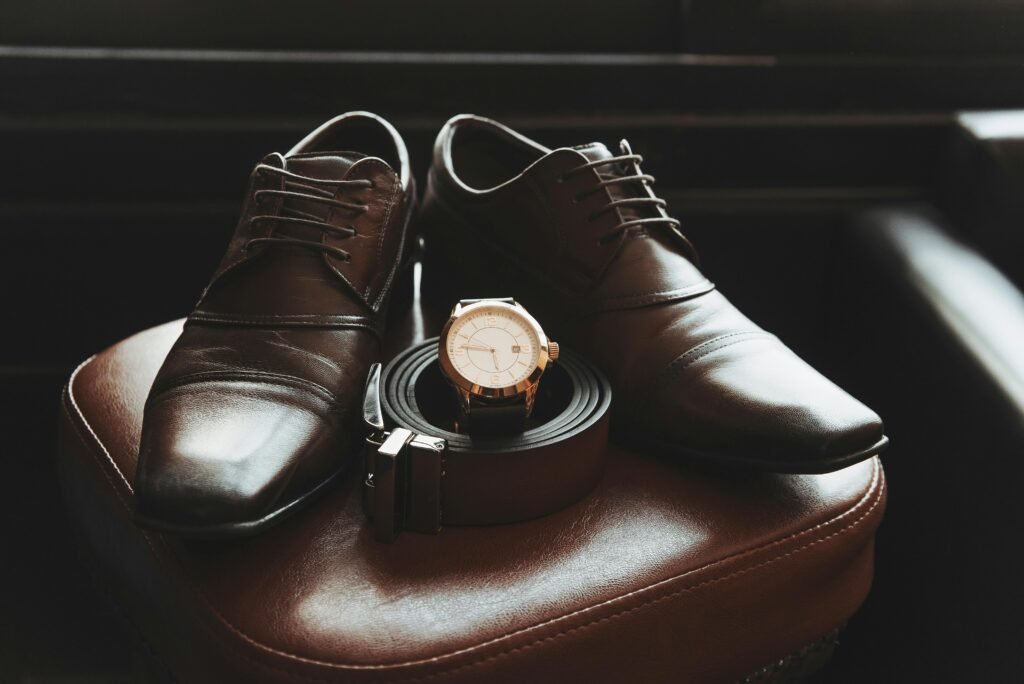
Leather is one of the oldest materials in human history and one of the most misunderstood in modern commerce.
Most men own leather goods. Few men understand what they own. The difference matters because leather at its best is a material that improves with age, develops character through use, and lasts decades with proper care. Leather at its worst is a processed surface coating on a cardboard substrate that peels after eighteen months and ends up in a landfill.
Knowing the difference before you buy changes what you own and how long you own it.
The Types of Leather — What You Are Actually Buying
Full grain leather — The highest quality. The outermost layer of the hide with the natural grain intact. It has not been sanded, buffed, or corrected. The natural markings — variations in texture, small scars, grain patterns — are visible and are features not flaws. Full grain leather breathes, develops a patina over time, and is the most durable leather available. It is what saddles, fine briefcases, and quality footwear are made from.
If a leather good does not specify full grain it is almost certainly not full grain.
Top grain leather — The second highest quality. The outermost layer of the hide that has been sanded or buffed to remove imperfections and then treated with a finish coat. More uniform in appearance than full grain. Less durable over time because the buffing removes the tightest, most durable fiber structure of the hide. Most mid-range leather goods use top grain.
Genuine leather — A legal term that means the product contains real leather. It does not specify quality, grade, or which layer of the hide. Genuine leather is typically made from the lower layers of the hide — the split — which has been processed heavily and coated with polyurethane or similar finishes to look like higher quality leather. It peels, cracks, and degrades. It is the leather of fast fashion accessories and disposable goods.
The presence of “genuine leather” on a label is often a warning rather than a recommendation.
Bonded leather — Not leather. It is leather fibers and scraps bonded together with adhesive and coated with polyurethane. It looks like leather briefly. It degrades rapidly and dramatically. Avoid it entirely.
The Tanning Process — Why It Matters
Leather begins as animal hide. Tanning is the process that converts it from a perishable biological material into a stable, durable good. The tanning method significantly affects the final product’s character, durability, and environmental impact.
Vegetable tanning — The oldest method. Uses tannins derived from tree bark — primarily oak and chestnut — in a process that takes weeks to months. Produces firm, dense leather that begins stiff and breaks in gradually, developing a rich patina with use and exposure to light. The leather of fine saddles, quality belts, and premium briefcases. It marks and scratches more easily than chrome tanned leather — which is a feature. Those marks become part of the character.
Vegetable tanned leather is the correct choice for goods you intend to own for decades.
Chrome tanning — The modern industrial method. Uses chromium salts in a process that takes hours. Produces softer, more uniform leather that is water resistant and colorfast. Most commercial leather is chrome tanned. It does not develop patina the way vegetable tanned leather does. It is appropriate for certain applications — shoe uppers, garment leather, soft goods — where suppleness matters more than character development.
The Patina — What It Is and Why It Matters
Patina is the change that leather undergoes with use and age. In full grain vegetable tanned leather it manifests as a deepening and enriching of color, a development of a subtle sheen, and an increasing softness and suppleness as the leather absorbs the natural oils of the wearer’s hands and skin.
A wallet that has been carried for five years looks entirely different from the same wallet when new. Not worse. Better. Richer. More personal. Uniquely its own.
This is the quality that distinguishes leather as a material from almost every other. Most materials degrade with use. Quality leather improves. The scratches that mark it, the oils that condition it, the fading that develops across its surface — these are records of the life it has been part of.
The man who understands patina buys differently. He does not look for perfection in a new leather good. He looks for the potential to develop character over the decades he intends to own it.
The Goods — What to Buy and From Whom
Wallets
The wallet is the leather good most men own and most men buy badly — too thick, too cheap, replaced every two to three years.
A proper wallet in full grain leather lasts a decade or more, breaks in beautifully, and becomes one of those objects that a man uses every day without thinking about because it simply works correctly.
Bellroy — The standard recommendation for the man who wants a slim, functional, quality wallet at an accessible price. Their Hide and Seek and Note Sleeve are the two best slim wallets available under $150.
Saddleback Leather — American company with a lifetime guarantee on everything they make. Their bifold and trifold wallets in full grain leather are among the most durable consumer goods available. Thick and substantial compared to slim wallets but built to last multiple lifetimes.
Il Bussetto — Italian vegetable tanned leather. Hand stitched. Small production runs. The wallet the man who knows wallets eventually owns.
Ettinger — British. Made in England since 1934. Full grain bridle leather with a sterling silver corner. The wallet that looks better at twenty years than it does today.
Bags
The quality of a man’s bag says something about him before he opens it. A well-made leather bag — briefcase, weekender, tote — is an investment that pays daily returns for years.
Saddleback Leather Classic Briefcase — Full grain leather, saddle construction, 100 year guarantee. Not a marketing claim — an actual 100 year guarantee. This is the briefcase that outlives the man who buys it. Substantial, beautiful, improves dramatically with use.
Filson Rugged Twill Briefcase — Not leather but worth including. Waxed cotton canvas with leather trim. American made, virtually indestructible, develops character with use. The bag for the man who works in conditions where a leather briefcase would be impractical.
Valextra — Italian. Minimal. Perfect construction. The briefcase that Milanese executives carry. Extremely expensive. Extremely correct.
Mismo — Swedish. Clean Scandinavian design, quality leather, understated. The bag for the man who wants luxury without obvious branding.
Belts
A belt is a structural garment — it holds trousers in place — and an accessory — it completes an outfit. Quality in both dimensions matters.
A proper leather belt in full grain leather lasts a decade or more. A cheap belt lasts eighteen months before the layers separate and the edges crack.
Trafalgar — American belt maker since 1965. Full grain leather, brass hardware, made in the USA. The correct belt for dress and business occasions.
Anderson’s — Italian woven leather belts. The belt that stylish men wear with tailored trousers. Reversible, supple, surprisingly versatile.
Mission Belt — For the man who wants a ratchet mechanism instead of holes. No-hole design, more precise fit, premium leather options. The practical choice that does not sacrifice appearance.
Shoes
Shoe leather quality determines both comfort and longevity more than any other construction element. A well-made leather shoe on a proper last in quality leather lasts decades with proper care. A shoe in poor leather on a cheap last lasts two seasons.
Horween leather — The benchmark of American shoe leather. Produced in Chicago since 1905. Shell cordovan — made from the fibrous flat muscle beneath the hide of a horse — is the most durable and beautiful leather used in shoe production. It does not crease. It does not crack. It polishes to a mirror finish. A pair of shell cordovan shoes maintained correctly lasts a lifetime.
Brands that use Horween leather: Alden — the American standard for quality footwear. Grant Stone — exceptional value at their price point. Rancourt — Maine made, exceptional construction.
Italian calf leather — The standard for luxury dress shoes. Supple, takes polish beautifully, develops character with wear. Edward Green, John Lobb, and Gaziano and Girling represent the summit of English shoe production on Italian and English calf leather.
The Care — Make It Last
Leather is skin. Like skin it benefits from cleaning, conditioning, and protection. Neglect it and it dries, cracks, and degrades. Care for it and it improves.
For smooth leather shoes and boots:
Clean with a soft brush or damp cloth to remove surface dirt before conditioning or polishing.
Condition regularly — every three to four wears in dry conditions, more frequently in dry climates or during winter. Saphir Renovateur is the standard conditioning product among serious shoe care enthusiasts. Apply sparingly with a soft cloth, allow to absorb, buff with a horsehair brush.
Polish for shine and color maintenance. Saphir Medaille d’Or cream polish matches leather color while adding shine and conditioning. Saphir Mirror Gloss for a high shine finish on toe caps when the occasion demands it.
Cedar shoe trees — full toe, split toe construction — absorb moisture after wearing and maintain the shape of the shoe. Insert them immediately after removing the shoes. The man who does not use shoe trees is shortening the life of his shoes measurably.
Never dry leather goods near a heat source. Heat destroys leather by drawing out its natural oils and causing irreversible cracking. Allow wet shoes to dry at room temperature stuffed with newspaper.
For leather bags and wallets:
Condition annually with a leather conditioner appropriate for the specific leather type. Leather Honey is a reliable all-purpose conditioner. Saphir Renovateur works equally well on bags as on shoes.
Keep leather bags away from prolonged direct sunlight which fades color unevenly. Store in a dust bag when not in use.
Clean surface dirt with a slightly damp soft cloth. Allow to dry completely before conditioning.
For leather jackets and garments:
Condition annually. Store on a proper wide hanger that maintains the shoulder shape. Do not store in plastic — leather needs to breathe.
Take to a specialist leather cleaner for anything beyond surface dirt. The wrong cleaning product on a leather garment causes irreversible damage.
The Investment Logic
A $400 full grain leather briefcase maintained correctly for twenty years has a cost per year of $20. A $100 bonded leather briefcase replaced every two years has a cost per year of $50.
The quality purchase is cheaper over time and produces a better experience every day between now and when the accounting is done.
This is true of almost every leather good at every price point. The quality costs more on day one. It costs less on every day after that.
Buy the best leather good you can afford for each category. Learn to care for it. Use it until it develops the kind of character that cannot be bought — only earned through years of daily life.
That is what leather is for.
There Goes That Man. The search is over.