
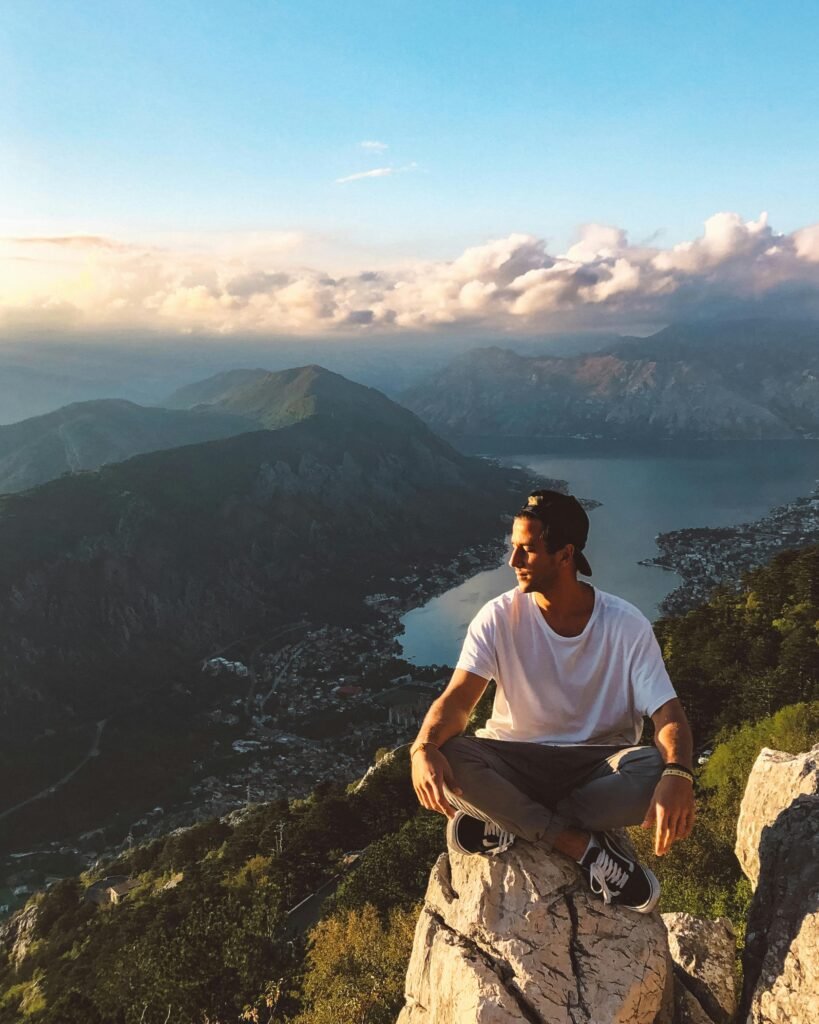
Physical strength is visible. Mental strength is not. But it is the variable that determines what a man does with his physical strength, his intelligence, his opportunities, and his time.
The man with average ability and extraordinary mental toughness outperforms the man with extraordinary ability and average mental toughness in almost every context that matters. History is full of examples. The man who built the company, won the championship, survived the ordeal, finished the race — he was not always the most talented man in the room. He was the one who did not quit when quitting became the reasonable option.
Mental toughness is not a personality trait you either have or do not have. It is a skill. It is built the same way every other skill is built — through deliberate practice, progressive challenge, and honest assessment of where you are falling short.
Here is how to build it.
First — Understand What Mental Toughness Actually Is
Mental toughness is not the absence of fear, doubt, or discomfort. Every man experiences those things. The mentally tough man experiences them and acts anyway. He feels the resistance and moves through it rather than around it.
It is not suppression. The man who suppresses fear or doubt is not mentally tough — he is a pressure cooker. Mental toughness is the ability to acknowledge difficulty honestly and continue forward despite it.
It is not recklessness. The mentally tough man does not ignore risk or pain signals that require attention. He distinguishes between the discomfort of growth — which is productive — and the pain of injury — which is not.
Mental toughness is the capacity to choose your response to difficulty rather than being determined by it. Viktor Frankl called this the last human freedom — the freedom to choose your attitude in any circumstance. It is the foundation everything else is built on.
The Four Pillars — What Mental Toughness Is Made Of
1. Control
The mentally tough man exercises control over what he can control and releases what he cannot. This sounds simple. It is one of the hardest things a man can actually do.
What you can control: your effort, your preparation, your attitude, your response to setbacks, how you treat other people, what you put into your body, how you spend your time.
What you cannot control: the economy, other people’s behavior, the weather, the referee’s call, whether the investor says yes, whether the diagnosis is what you hoped for.
The man who spends energy on what he cannot control has less energy for what he can. Every hour spent in anxiety about external circumstances is an hour not spent improving internal ones.
This is not passivity. It is strategic allocation of finite resources — attention, energy, emotional bandwidth — toward the variables that respond to them.
2. Commitment
Commitment is the decision to continue past the point where stopping becomes justifiable. Every meaningful pursuit has a threshold — a point of sufficient difficulty that a reasonable man could reasonably stop. The committed man does not stop there. He uses the difficulty as evidence that he is in the right place — that anything worth having requires passing through exactly this kind of resistance.
Commitment is not blind persistence. The man who continues pursuing a demonstrably wrong path because he is too proud to change direction is not committed — he is stuck. Commitment requires honest assessment of whether the path is right combined with refusal to abandon it because it is hard.
The distinction: change direction because the destination is wrong. Never change direction because the terrain is difficult.
3. Challenge
The mentally tough man sees difficulty as an opportunity rather than a threat. This is not toxic positivity — pretending difficulty is not difficult. It is a genuine reframe of what difficulty means.
Every obstacle contains information. What is this teaching me? What is this developing in me? What would I be missing if this had been easy?
The man who has never been genuinely challenged does not know what he is capable of. The man who seeks challenge — who deliberately puts himself in situations where failure is possible and the outcome is uncertain — builds a map of his own capability that the comfortable man never develops.
This is why the physically and mentally demanding experiences — the military, the marathon, the startup, the wilderness expedition — produce a specific kind of confidence that comfort cannot manufacture. They show a man what he is made of in conditions where the question actually matters.
4. Confidence
Not the confidence of believing you will always succeed. The confidence of believing you can handle whatever happens — success, failure, and everything between.
This confidence is not manufactured through affirmations or positive thinking. It is built through evidence — through repeated experience of doing hard things and surviving them, of failing and recovering, of being afraid and acting anyway.
Every time a man does something difficult he adds evidence to his self-concept. Every time he avoids difficulty he subtracts it. The accumulation over years determines the foundation of confidence he operates from.
Build the evidence base. Do the hard things. The confidence follows.
The Practices — How to Build Mental Toughness Deliberately
Cold exposure
Cold showers or cold water immersion are among the most accessible mental toughness training tools available. Not because of their physiological benefits — though those are real — but because they provide a daily practice of choosing discomfort deliberately.
Every morning the warm shower is available and the cold water is the alternative. The man who chooses the cold water has made a decision to override comfort in service of something he values. That decision — made daily — builds the neural pathway of doing hard things despite resistance.
Start with thirty seconds of cold water at the end of your shower. Build to two minutes. Then full cold showers. Then cold plunges if you want to go further.
The practice is not about cold tolerance. It is about the daily decision to choose discomfort when comfort is available.
Hard physical training
The body and mind are not separate systems. Training the body under difficulty trains the mind in difficulty simultaneously.
The final miles of a long run. The last set of a heavy lift when every signal says stop. The final round of a hard interval session. These are not only physical challenges. They are mental ones. The man who learns to push past his perceived limits in a training context learns that perceived limits are frequently not actual limits.
Regularly train past the point you want to stop. Not recklessly — beyond injury risk. But consistently past the point where stopping feels justified.
The mental toughness built in training transfers to every other context where mental toughness is required.
Voluntary discomfort
Beyond formal training deliberately seek discomfort in daily life. Not suffering — strategic friction.
Wake up earlier than necessary. Do the difficult conversation you have been avoiding. Approach the person you are hesitant to approach. Take the harder path when an easier one is available. Fast for a day. Sleep on the floor occasionally. Carry something heavy for no reason other than practice.
The Stoics called this negative visualization and voluntary hardship — the practice of occasionally living as though you have lost what you most value in order to appreciate it and to build resilience against actually losing it.
The man who has chosen discomfort regularly is not devastated by unexpected discomfort. He has a reference point. He knows he can handle it because he has handled it before.
Goal setting with accountability
Mental toughness requires direction. The man who is tough but purposeless is energy without a target.
Set goals that require mental toughness to achieve — goals large enough that failure is possible and the path is uncertain. Then make them public. Tell someone who will ask about your progress. Write them where you will see them daily.
Accountability is not weakness. It is infrastructure. The man who tells no one his goals has created an easy exit. The man who has told people he respects has created productive pressure.
Meditation and mindfulness
The ability to observe your own thoughts without being controlled by them is a foundational mental toughness skill. Meditation builds this ability.
Not mystical meditation. Practical meditation — sitting quietly and observing the stream of thoughts that arise without following them, without judging them, without being carried away by them.
The man who can observe his fear without becoming his fear, observe his doubt without becoming his doubt, observe his discomfort without being controlled by it — that man has a significant advantage in every context where those things arise.
Start with ten minutes daily. Headspace or Calm provide guided sessions that are genuinely useful for beginners. Build to twenty minutes. Do it every day regardless of whether you feel like it — especially on the days you do not feel like it.
The Mindset Shifts — How Mentally Tough Men Think Differently
They reframe failure.
Failure is not the opposite of success. It is a component of it. Every man who has built anything significant has failed repeatedly on the way to building it. The failure was not incidental — it was instructional. It provided information that success would not have.
The mentally tough man asks after every failure: what did this teach me? What will I do differently? How does this make the next attempt better informed?
He does not ask: why does this always happen to me? Why am I not good enough? When does it get easier?
They control their self-talk.
The voice in your head is not a neutral observer. It is a participant. It affects your performance, your confidence, and your persistence in ways that are measurable and significant.
Most men talk to themselves in ways they would never talk to someone they respect. They call themselves stupid, weak, a failure, an idiot — in response to ordinary mistakes and ordinary setbacks.
The mentally tough man speaks to himself the way a good coach speaks to a good athlete — honestly, directly, without cruelty, with belief in the capacity to improve.
Monitor your self-talk for one week. Note what you say to yourself when things go wrong. Then deliberately change the language. Not to false positivity. To honest, coaching-oriented self-talk that acknowledges difficulty and maintains belief in the capacity to handle it.
They embrace the process.
The outcome is outside your control. The process is not. The mentally tough man focuses relentlessly on what he can do today — the training, the preparation, the work — and trusts that outcomes follow from process executed consistently over time.
This is the difference between the man who obsesses about results and the man who obsesses about inputs. The result-focused man is anxious and inconsistent. The process-focused man is calm and relentless. Over time the process-focused man produces better results because he is not distracted by the very thing he is working toward.
They use adversity as fuel.
The man who has been underestimated, dismissed, told he was not good enough, passed over for the opportunity he earned — that man has a resource available to him that the comfortable man does not. Chip on the shoulder is not always healthy but directed correctly it is extraordinarily powerful.
The mentally tough man does not forget what motivated him. He uses it. He keeps it accessible. He returns to it on the days when motivation is insufficient and discipline is required.
Not bitterness. Purpose. The difference is direction. Bitterness looks backward. Purpose looks forward and uses the past as fuel.
The Long View
Mental toughness is not built in a crisis. It is built in the ordinary days — the days when nothing dramatic is happening and the only choice is whether to do the work or not, whether to show up or not, whether to choose the harder path or the easier one.
The mentally tough man is not the one who performs heroically in a single dramatic moment. He is the one who performs consistently in thousands of unremarkable moments over years. The heroic moment — if it comes — is simply one more ordinary moment for a man who has been practicing for it his entire life.
Build the practice. In the small decisions. Every day.
The extraordinary is built from the ordinary, accumulated over time, by the man who refuses to take the easy exit when it appears.
That man is the one worth being.
There Goes That Man. The search is over.